
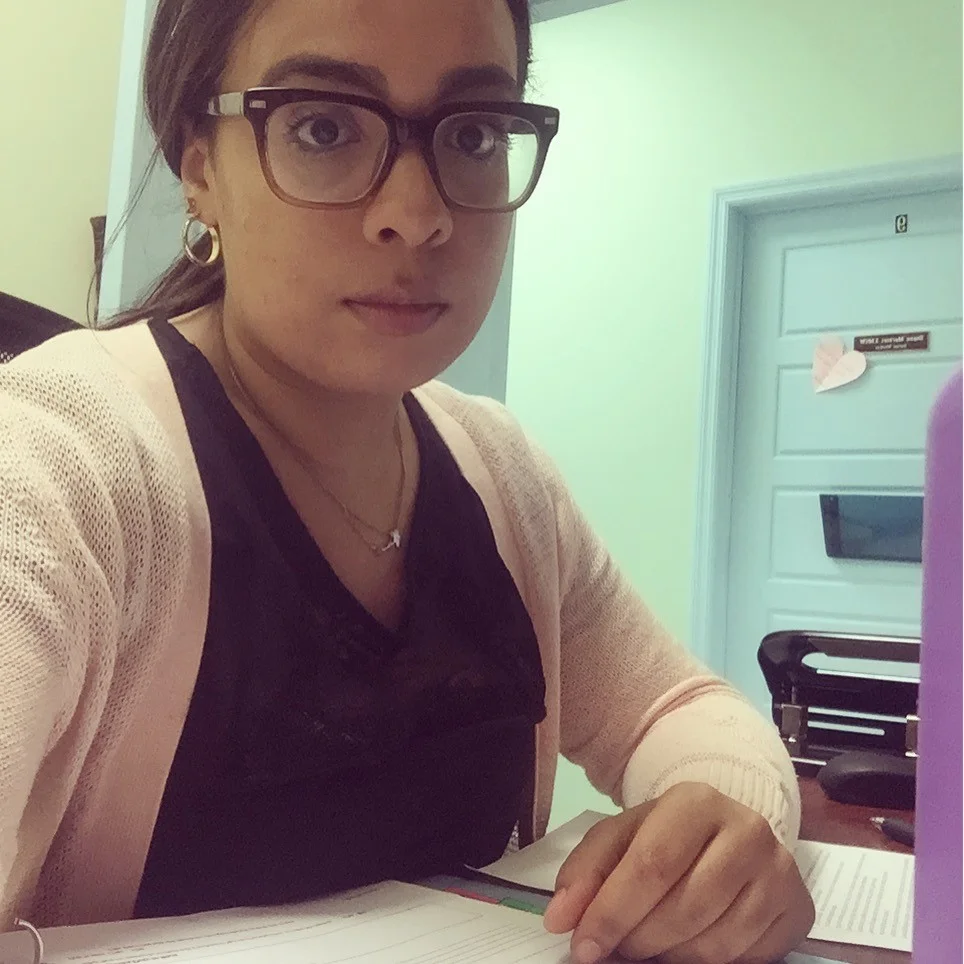
Lilibeth Polanco interview about pursuing her passion
Why did you pursue social work?
As early as I could remember, I always enjoyed working with people and helping others. My mother is a Nanny and I always would go with her to work. As I began to get older, I started babysitting for the children she cared for on weekends and I remember one of the children always coming to me and asking for advice regarding her friends and problems at school. By my senior year in high school I had thought I wanted to become a teacher. In college as I was doing my practicum hours at a Syracuse city school, I then realized that although teachers work very closely with children one on one, they don't have the time to help each child individual needs. I started seeing how many children were distracted in school due to lack of sleep or some sort of family problems that couldn't be addressed in the classroom. Junior year in college I decided to no longer pursue education as my major and just stuck to psychology. When I entered my senior year I did an internship with a school social worker and that is when I officially decided that social work is the career for me. I decided to pursue social work because it is such a broad career. Social work is literally everywhere. You see social workers working in hospitals, schools, jails, clinics, foster care, courts, anywhere you can imagine. I knew that if I pursued social work as my career I would always be able to help people directly which is what I enjoy doing.
When did you realize that this was your passion?
I always knew I enjoyed working with people and helping people, but I came to realize this was my true passion during my second job out of college. When I first graduated undergraduate I landed a position as a youth care work with Boys Town at a non-secure detention program. I worked the night shift from 10PM- 8am. My job basically consisted of ensuring none of the youths escaped during the night. I only had two hours of direct contact with the youths during my shift, sometimes more if I got lucky and got stuck doing overtime. I knew that this position wasn't for me and it was so hard getting another shift because they couldn't find someone to replace my position. I then decided to seek another job and got hired as a case planner for a preventive agency funded by ACS. During my position of a case planner I truly realized social work was my passion and the career for my. As I was working full time I was also working on my Masters full time (I was constantly tired, sleepy exhausted, anything you can think of). Every day I went to work I enjoyed working with the families and learned so much about the system that is not correct. At times I felt defeated and felt that there is nothing that can be done. Sometimes I lost sight of the real work and the reason why I decided to pursue social work but then the families I worked with always made me realize the reason I decided to get into this field. My position as a case planner ensured me that social work is my passion.
What gives you the strength to pursue your passion?
My clients give me strength to pursue my passion. Knowing that I am able to help to some capacity keeps me going. Working directly with clients is the main reason as to why I continued with social work.
How do you see your passion being manifested in the future?
As of now I am not sure about this question. I Know for sure though that one day I would like to hopefully help people in a greater scale but you never know what life will throw at you so for now I will continue working with my clients and hope that I am making a difference in some way.
Is there anything about you (gender, ethnicity, creed, etc.) that has been a driving motivator in pursuing your passion?
My ethnicity is a driving motivator to continue pursuing my passion. I am currently a therapist at a mental health clinic. I would say 70% of my clients are immigrants or children of immigrants. There's a stigma behind seeking mental health treatment and I hope that one day that stigma changes. I hope that through my job I am able to help with changing that stigma.
Describe one of your proudest moments. Describe a hardship and how it was overcome. (Both in relation to your passion).
One of my proudest moments was when I was a case planner. I worked with a mother of 5 girls who was a victim of domestic violence. I remember when I resigned from my position she told me that she was grateful for having me as a worker because she felt that I was the only person in her life that ever truly listened to her and advocated for her. Knowing that I couldn't change her life situation made it hard for me but when she was able to tell me she appreciated me made every difficult time worth it.
I would say my biggest hardship was when I was working full time, going to school full time, and doing a 14 hour weekly internship. During this time sometimes I felt alone and that no one knew the amount of stress I was in. I had plenty of breakdowns and felt like I was just doing too much. I overcame it by seeking support from my family and friends (especially a fellow classmate of mine who was in the same boat as me). Sometimes during the hardest times you feel that you are alone but the best way to overcome it is by seeking support. You will be surprised by how many people can relate and give some amazing advice.
What is self care to you and how do you practice it?
Self-care is ensuring that you take time for yourself to do things you enjoy. No matter what job you have or what you doing in life everyone need some form of self-care. Of course everyone practices self-care differently. I practice self-care by not bringing my work life into my personal life. As I step outside of my office I try my best to leave my work behind. I also enjoy reading, sleeping, and spending time with family and friends.
What advice do you have for people who are too afraid to follow their dreams?
Go for it. Sometimes we get so distracted by fears or peoples negative comments that we lose sight of pursuing our dreams. A dream cannot become a reality if you don't go for it, so put your worries, fears, and the negativity to the side and go for it because I am certain that in the end it would be worth it.
Lada: I met Lili during my time in undergrad. Her passion and dedication for social work is inspiring and she’s always offered kind words and advice when I needed it, especially as I pursue my Masters. I was so happy that she agreed to do the interview.